Hungarian Football Federation turns 125 years old
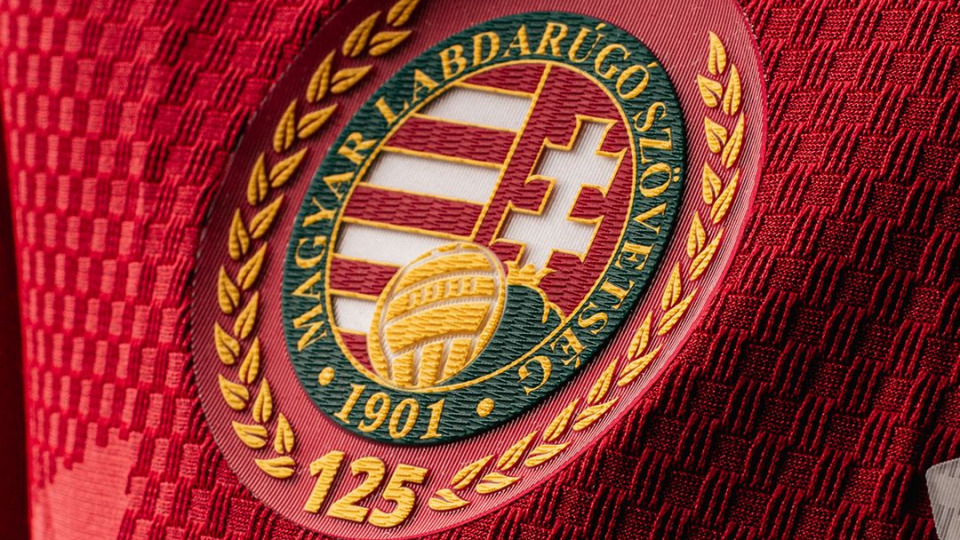
The MLSZ – or as it was known then, the Federation of Hungarian Footballers – was founded 125 years ago to this day, on 19th January 1901, by representatives of thirteen sports clubs in a private room at the Archduke István Hotel, situated at 1 Akadémia utca in Budapest.
It is worth emphasising that the footballers in our country weren’t to be part of a wider sports governing body, but that it was considered important for an independent football association to be established. Therefore, its foundation was both unique and modern in continental Europe.
The founding clubs were the following: BAK, BEAC, BSC, BTC, Budai Ganzgyár, Ganz Vagongyár, “33” FC, MAC, MFC, MUE, Műegyetemi FC, Postás and FTC. We were at the dawn of football at that time, the MLSZ becoming only the ninth national football governing body in continental Europe, while only a few countries outside Europe had already founded official national football associations.
A matter of weeks later, the first Hungarian league championship fixture was played and in autumn 1902, the two countries of the Austro-Hungarian Monarchy played their inaugural official match against each other. This was the first international match in continental Europe to feature two nations, neither of which were British.
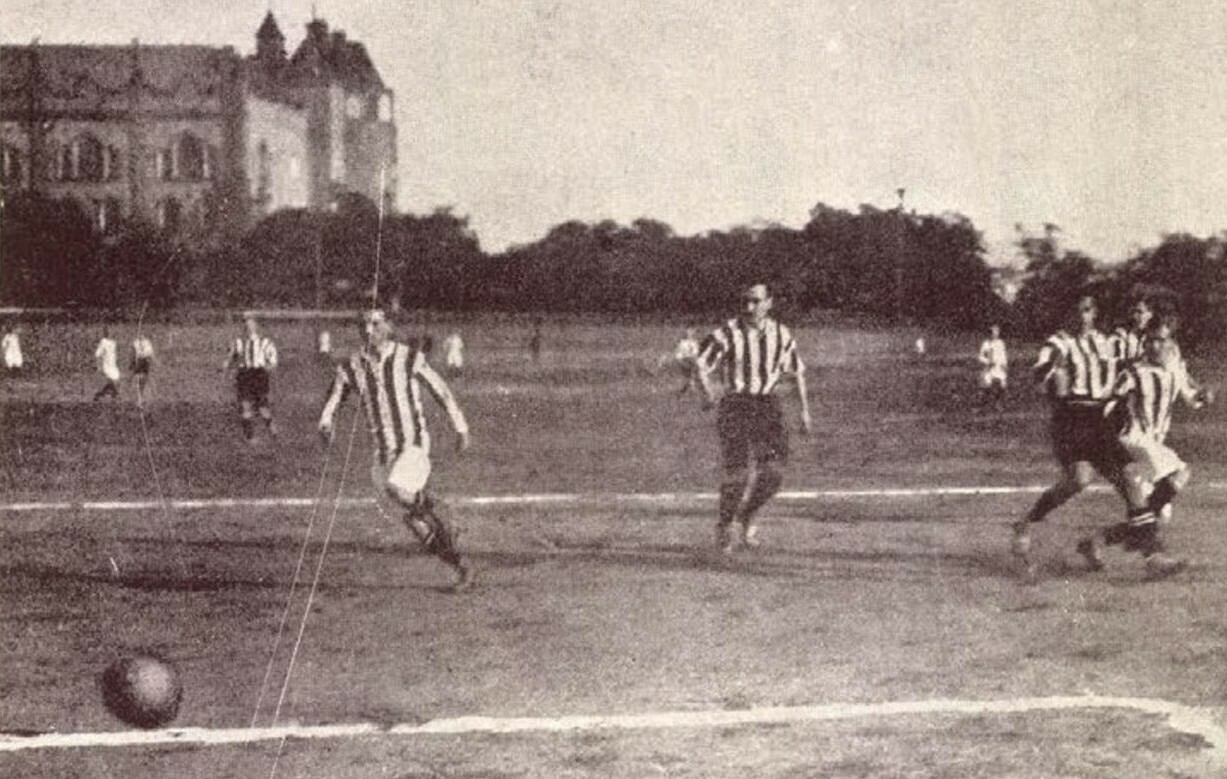
We’re able to mention great successes and significant moments from every decade since then. The first ever Hungarian league fixture counts as one of those from the first decade, then in the 1910s, there is the victory in the Consolation Tournament at the 1912 Olympic Games in Stockholm. In the 1920s, Hungarian club Ferencváros won the Central European Cup and defeated two-time Olympic champions Uruguay while on tour in South America, before the 1930s saw Újpest win the Cup of Nations and prevail in the first all-Hungarian Central European Cup final. Meanwhile, on the international scene, Hungary won the silver medal at the 1938 World Cup. The first half of the 1940s was taken up by World War Two, but the second half saw Tibor Gallowich lay the foundations for the ‘Golden Team’, Hungary’s national team which became almost unbeatable in regional cup competitions. The 1950s are synonymous with the Golden Team’s successes; an Olympic gold medal, winning the Central European International Cup by beating Italy in the inaugural match of Rome’s Olympic Stadium, defeating England twice and the 4-2 victories over Brazil and Uruguay on the way to the 1954 World Cup final.
Two more Olympic football gold medals were won in the 1960s, a decade which also featured appearances in two World Cup quarter-finals and a third-place finish at the 1964 European Championship. At club level, Ferencváros won the Inter-Cities Fairs Cup in 1965. The 1970s saw Hungary again reach the World Cup and in the 1980s, Videoton became the most recent Hungarian club to reach a major European final. Based on its results in 1985, György Mezey’s national team became one of Europe’s best ahead of the World Cup in Mexico, but subsequently results slipped and the 1990s was a period of decline, but recent years have brought encouraging progress, most notably through Hungary’s three consecutive appearances at the UEFA European Championship in 2016, 2021 and 2024.
The Hungarian national team qualified for the European Championships in 2016 and again in 2021. At the former tournament, the team was led by Bernd Storck and not only progressed from the group stage but did so as group winners, advancing to the round of 16 after drawing 3–3 with the eventual champions Portugal, thanks to a goal by Zoltán Gera and a brace from Balázs Dzsudzsák. At the latter tournament, the team competed under the guidance of Marco Rossi. In fact, the hat-trick was completed as Marco Rossi’s side also qualified for the continental tournament in 2024, finishing top of their qualifying group unbeaten.
Since 2019, the national team has played its home matches at one of Europe’s most modern stadiums, the new Puskás Aréna, where capacity crowds of nearly 60,000 spectators regularly cheer on the national side. Over the past six-plus years, the Puskás Aréna has hosted European Championship matches, a UEFA Super Cup final and a Europa League final, and on 30 May 2026 it will stage the final of Europe’s premier club competition, the UEFA Champions League.
A hírkategória további hírei

2026-05-06 14:03:13
Hungarian football mourns legend László Fazekas

2025-11-25 22:00:38
MLSZ ExCo expects better results from its men's national team and head coach

2025-10-14 00:34:18
Hungarian presence on FIFA Committees increases significantly

2025-10-08 19:27:22